 English
 Español
  Português
  русский
  Français
  日本語
日本語  Deutsch
  tiếng Việt
  Italiano
  Nederlands
  ภาษาไทย
  Polski
  한국어
한국어  Svenska
  magyar
  Malay
Malay  বাংলা ভাষার
  Dansk
Dansk  Suomi
Suomi  العربية

How Dehydrated Potato Flakes Improve Efficiency in Instant Food Production
The instant food industry runs on one core principle: deliver consistent quality at scale, without wasting time or raw materials. Dehydrated Potato Flakes have become one of the most strategically important ingredients driving that goal forward. From instant mashed potatoes and snack coatings to soup bases and bakery fillers, their process-ready format gives manufacturers a measurable operational edge over fresh or frozen potato inputs. The ability to rehydrate rapidly, blend uniformly, and maintain stable shelf life makes them irreplaceable in high-volume production environments.
At Xinjiang Wenxing Potato Industry Co., Ltd., our factory has spent years perfecting the cultivation, processing, and quality control of Dehydrated Potato Flakes that meet the rigorous demands of global food manufacturers. This article walks through the technical and operational reasons why our product consistently outperforms alternatives on the production floor, backed by precise specifications, process data, and real-world application insight.
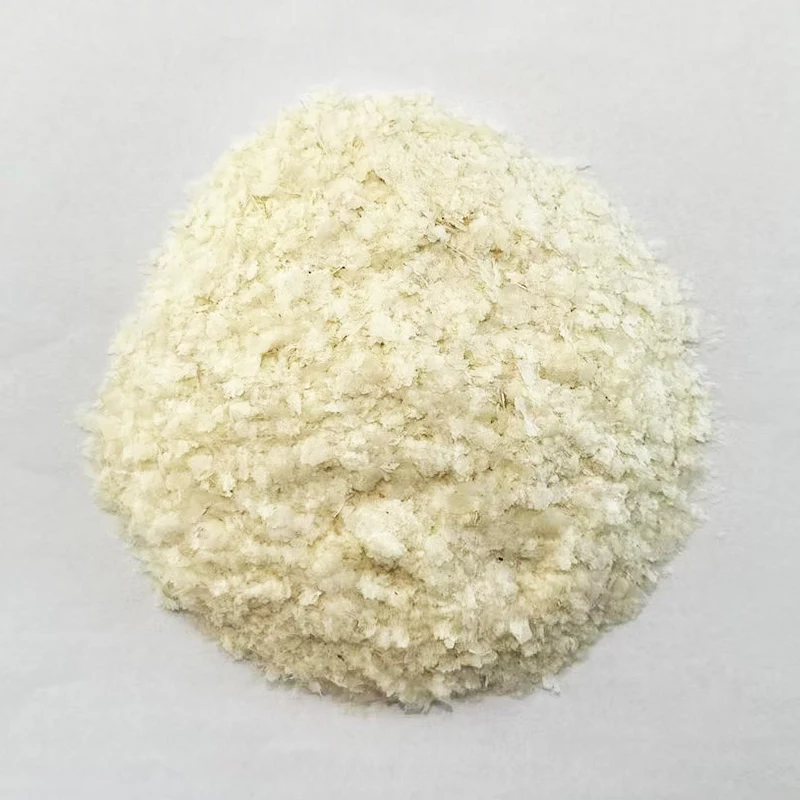
Table of Contents
- What Makes Dehydrated Potato Flakes a Superior Ingredient for Instant Food Manufacturing
- Why Dehydrated Potato Flakes Reduce Production Costs and Operational Waste
- How Our Product Specifications Deliver Consistent Performance at Scale
- Which Production Applications Benefit Most from Dehydrated Potato Flakes
- How Dehydrated Potato Flakes Support Food Safety and Compliance Standards
- Conclusion
- FAQ
What Makes Dehydrated Potato Flakes a Superior Ingredient for Instant Food Manufacturing
Manufacturers sourcing potato-based ingredients face a recurring trade-off between raw material stability and production flexibility. Fresh potatoes introduce variables that are difficult to control at scale: seasonal moisture variation, inconsistent starch content, spoilage risk, and the labor-intensive preparation required before processing. Dehydrated Potato Flakes eliminate most of these variables by delivering a shelf-stable, pre-processed ingredient that enters the production line ready to perform.
The structural advantage of Dehydrated Potato Flakes lies in their cellular integrity. Our factory uses a drum-drying process that preserves the starch granule structure while removing moisture to a level below 8%. This means that when the flakes are rehydrated, they reconstitute into a smooth, lump-free texture that closely mimics freshly cooked mashed potato. For instant food producers, this predictability is not a convenience, it is a competitive necessity.
Key performance advantages that set Dehydrated Potato Flakes apart from alternative potato formats include:
- Rapid and uniform rehydration typically within 2 to 3 minutes at 80 degrees Celsius
- Consistent dry bulk density enabling precise volumetric dosing in automated filling lines
- Neutral flavor profile that accepts seasoning blends without masking or competing notes
- Low free starch content reducing lumpiness during mixing and preventing equipment fouling
- Extended ambient shelf life of 18 to 24 months reducing inventory pressure and supplier dependency
- Low microbial activity due to reduced water activity making the ingredient inherently safer for dry blending
- Consistent whiteness index and color score ensuring end-product visual uniformity across production batches
These properties translate directly into fewer line stoppages, more consistent product output, and reduced reliance on skilled preparation labor. For global instant food brands running multi-shift operations, Dehydrated Potato Flakes from Xinjiang Wenxing Potato Industry Co., Ltd. represent a production input that is engineered for reliability.
Beyond performance, the logistical footprint of Dehydrated Potato Flakes compared to fresh potatoes is dramatically reduced. One metric ton of our flakes replaces approximately 4 to 5 metric tons of fresh potatoes in equivalent recipe yield. This compaction ratio cuts inbound freight volume, cold chain requirements, and warehouse space, each of which represents a direct cost saving that compounds across annual procurement cycles. Our clients routinely report that switching from fresh potato inputs to our flakes reduced their inbound logistics cost by 30 to 40 percent in the first year alone, without any reduction in finished product quality. The efficiency case is both intuitive and empirically supported across diverse manufacturing environments.
Why Dehydrated Potato Flakes Reduce Production Costs and Operational Waste
Cost efficiency in instant food manufacturing is rarely about finding the cheapest raw material. It is about finding the ingredient with the lowest total cost of ownership across the entire production cycle. Dehydrated Potato Flakes consistently outperform fresh and frozen potato alternatives when all cost dimensions are accounted for, including procurement, storage, preparation, yield loss, and quality control.
Our factory supplies Dehydrated Potato Flakes in standardized 25 kg multi-layer kraft paper bags and 500 kg to 1000 kg bulk flexible intermediate bulk containers. Both formats are engineered for direct integration into automated production lines, eliminating manual transfer steps that introduce contamination risk and labor cost. The consistent particle size distribution across our product grades ensures that dosing equipment performs at specification without frequent calibration, a hidden cost that affects many manufacturers using inconsistent dry ingredients.
The waste reduction benefits deserve particular attention across several production dimensions:
- Zero peeling waste compared to fresh potato processing which typically loses 15 to 25 percent of raw material weight during preparation
- No trimming losses from eyes, blemishes, or green sections that affect fresh potato yield
- No spoilage losses during storage given ambient shelf stability under dry conditions
- Precise recipe dosing enabled by low moisture variance reducing over-formulation to compensate for natural ingredient variability
- Reduced cleaning cycle frequency due to low free starch and low fat content in our product grades
- Elimination of blanching and cooking steps required for fresh potato processing, cutting energy consumption per production run
A comparative cost model illustrates the financial case clearly:
| Cost Factor | Fresh Potato | Frozen Potato | Dehydrated Potato Flakes |
| Storage Temperature Requirement | 2 to 6 degrees Celsius | Minus 18 degrees Celsius | Ambient (below 25 degrees Celsius) |
| Shelf Life | 2 to 4 weeks | 6 to 12 months | 18 to 24 months |
| Preparation Labor Required | High (washing, peeling, cutting) | Medium (thawing, portioning) | None |
| Yield Loss from Raw to Process-Ready | 15 to 25 percent | 5 to 10 percent | Less than 1 percent |
| Freight Volume per Equivalent Yield | 4x to 5x | 2x to 3x | 1x (baseline) |
| Cold Chain Infrastructure Needed | Yes | Yes | No |
For manufacturers operating in markets where cold chain infrastructure is unreliable or expensive, the shift to Dehydrated Potato Flakes is not just a cost optimization, it is a supply chain risk mitigation strategy. Wenxing ships our product year-round with no seasonality constraints, giving our clients purchasing stability that fresh potato supply chains simply cannot match. Our procurement team works with clients to establish annual supply agreements that lock in price and volume commitments, reducing the budget variance that plagues buyers who source seasonally from spot markets. For finance teams tracking ingredient cost-per-unit metrics, the predictability of our pricing model is itself a quantifiable efficiency advantage that shows up in quarterly financial reporting.
How Our Product Specifications Deliver Consistent Performance at Scale
Production efficiency is only sustainable when the input ingredient performs within tight tolerances batch after batch. Our factory operates with a specification-first quality philosophy, meaning every parameter in our Dehydrated Potato Flakes product range is defined, tested, and documented before shipment. The following tables reflect our standard commercial grade and food-service grade product specifications.
Standard Product Parameters
| Parameter | Specification | Test Method |
| Moisture Content | Max 8.0% | ISO 712 / GB 5009.3 |
| Starch Content | Min 65.0% | Enzymatic method |
| Crude Protein | Min 5.5% | Kjeldahl method |
| Crude Fat | Max 0.5% | Soxhlet extraction |
| Crude Fiber | Max 2.0% | AOAC 962.09 |
| Ash Content | Max 4.5% | ISO 2171 |
| Whiteness Index | Min 80 WI units | Colorimetric measurement |
| Bulk Density | 350 to 450 g per liter | ISO 7837 |
| Water Activity (Aw) | Max 0.60 | Electronic hygrometer |
| SO2 Residue | Max 400 mg per kg | Codex Alimentarius standard |
| Total Plate Count | Max 50,000 CFU per gram | ISO 4833 |
| Coliforms | Max 100 CFU per gram | ISO 4832 |
| Salmonella | Absent in 25g | ISO 6579 |
Available Product Grades and Packaging Options
| Grade | Primary Application | Particle Size | Packaging Format | MOQ |
| Instant Mash Grade A | Direct-to-consumer instant mashed potato | 80 mesh pass rate over 95% | 25 kg kraft paper bag | 1 metric ton |
| Food Service Grade B | Restaurant and catering bulk packs | 60 mesh pass rate over 90% | 25 kg / 500 kg FIBC | 5 metric tons |
| Industrial Processing Grade C | Snack coatings, extruded products, soup bases | 40 mesh pass rate over 85% | 1000 kg FIBC | 10 metric tons |
| Organic Certified Grade | Clean-label and organic product lines | 80 mesh pass rate over 95% | 25 kg kraft paper bag | 2 metric tons |
Our factory conducts in-line quality checks at five critical control points during production: raw potato intake inspection, blanching and enzyme inactivation verification, drum drying temperature monitoring, moisture content testing post-drying, and final packaging seal integrity inspection. Each production batch is assigned a unique lot code enabling full traceability from farm to shipment container.
For clients with custom specification requirements, our technical team at Xinjiang Wenxing Potato Industry Co., Ltd. provides formulation support and can adjust parameters such as particle size distribution, whiteness target, and moisture ceiling to match specific equipment and end-product requirements. Our application laboratory maintains reference production setups for instant mash, extrusion, and dry blending that allow us to run trial batches to a client's specification before commercial production begins. This upstream technical partnership reduces the risk of on-line reformulation failures and accelerates new product launch timelines for our manufacturing partners. We treat every client specification as a performance contract, not just a purchasing description.
Which Production Applications Benefit Most from Dehydrated Potato Flakes
Understanding where Dehydrated Potato Flakes deliver the greatest efficiency gains helps procurement and R&D teams prioritize integration opportunities within their product portfolio. Our product is already embedded in a wide range of instant food categories, each benefiting from different aspects of the ingredient's functional profile.
Instant Mashed Potato Products
This is the most direct application. Our flakes rehydrate in less than 3 minutes with hot water to produce a smooth, creamy mash with no lumps. The starch gelatinization achieved during our drum-drying process means end-users do not need to cook the product, only reconstitute it. For manufacturers, this translates to minimal processing overhead and packaging line speeds that are limited only by fill weight and seal speed, not ingredient preparation time.
Snack Manufacturing and Coating Applications
Potato-based snacks, including fabricated chips, extruded rings, and coated crackers, rely on Dehydrated Potato Flakes as a primary dough component or surface coating ingredient. The low fat content in our product prevents rancidity during high-temperature extrusion while the consistent particle size ensures uniform dough hydration and predictable texture after frying or baking. Manufacturers in this category benefit from:
- Consistent dough rheology enabling stable extruder throughput rates
- Predictable oil uptake during frying due to controlled starch structure
- Uniform surface texture on coated products reducing seasoning adhesion variance
- Extended finished product shelf life supported by low ingredient fat oxidation potential
Soup, Sauce, and Dry Blend Applications
In dehydrated soup and sauce mixes, our Dehydrated Potato Flakes function simultaneously as a thickening agent, a texture contributor, and a flavor carrier. The neutral taste profile allows seasoning systems to perform as designed without interference. Our industrial processing grade, with its slightly coarser particle size, provides a more rustic texture profile suited to chunky soup formats, while our Grade A delivers the smooth dissolution preferred in cream-style soups.
Bakery and Pastry Formulations
Bread, rolls, and soft pastry applications increasingly incorporate Dehydrated Potato Flakes at 3 to 8 percent inclusion rates to improve moisture retention, extend softness shelf life, and reduce gluten network tightness. Our factory's low-free-starch flakes integrate cleanly into dough systems without creating sticky handling issues on high-speed dividing and molding lines.
Baby Food and Nutritional Applications
The organic certified grade meets the clean-label and additive-free requirements demanded by baby food and functional nutrition manufacturers. The naturally high potassium and vitamin C content in our potato varieties, partially preserved through our gentle drying process, supports nutritional positioning without the need for synthetic fortification. Our production team can provide full nutritional composition data and allergen status documentation needed for baby food regulatory submissions in EU, US, and APAC markets.
How Dehydrated Potato Flakes Support Food Safety and Compliance Standards
Global food manufacturers operate under increasing regulatory scrutiny, and ingredient compliance is non-negotiable. Our factory has built our quality management system around international food safety frameworks, ensuring that every shipment of Dehydrated Potato Flakes arrives with full documentation, traceable lot records, and test reports that satisfy the requirements of importing country regulatory bodies.
Our compliance framework covers the following certifications and standards:
- HACCP system implementation across all production lines with documented critical control point monitoring records
- ISO 22000 food safety management system certification
- Halal certification for markets in the Middle East, Southeast Asia, and North Africa
- Kosher certification available upon request for specific production runs
- EU food additive compliance for sulfite residue levels within Regulation EC No 1333/2008 limits
- China GB standard compliance for all domestic market shipments
- USDA and FDA import documentation support for North American clients
- Pesticide residue testing against Codex Alimentarius MRL tables conducted on each seasonal crop intake
Heavy metal testing is conducted at our factory laboratory and by third-party accredited laboratories on a quarterly basis. Our test panels cover lead, cadmium, mercury, and arsenic at detection thresholds below international regulatory limits. We provide certificates of analysis with every commercial shipment and can supply third-party test reports upon request.
Our traceability system connects each packaged lot to a specific production date, raw potato intake batch, and origin farm block within our contracted growing network in Xinjiang. This farm-to-package traceability satisfies the due diligence requirements of major retail supply chain audits including BRCGS, IFS Food, and SQF certification schemes held by our manufacturing clients.
For food manufacturers entering new export markets, our technical and documentation team can prepare country-specific compliance packages including ingredient declarations, nutrition fact panels formatted for target market labeling regulations, and product registration support documentation. Wenxing treats compliance not as a minimum requirement but as a service that reduces our clients' time-to-market in new regions. Our export documentation specialists have handled regulatory submissions for clients entering more than 30 country markets, and our compliance library is updated continuously as new regulations are enacted. This accumulated regulatory knowledge is part of the value we deliver alongside every pallet of product.
Conclusion
The efficiency gains that Dehydrated Potato Flakes deliver across instant food production are not theoretical. They are measurable at every stage of the supply chain, from reduced inbound freight and cold chain costs, to faster line setup, lower waste, and more consistent finished product quality. The ingredient's functional versatility means that a single well-specified product can serve multiple SKUs across a manufacturer's portfolio, simplifying procurement and inventory management simultaneously.
Xinjiang Wenxing Potato Industry Co., Ltd. has built our Dehydrated Potato Flakes product line around the real operational needs of food manufacturers, not just agricultural output targets. Our specifications are grounded in what production lines actually require to run at peak efficiency. Our compliance documentation reflects what quality assurance teams need to satisfy auditors and regulators. And our technical support reflects what R&D teams need when they are adapting our ingredient to new formulations.
The instant food market will continue to grow, and the pressure on manufacturers to produce faster, leaner, and more consistently will only increase. Dehydrated Potato Flakes from our factory represent an ingredient investment that compounds in value over time, because every batch that performs to specification is a batch that did not cost you a line stoppage, a product recall, or a customer complaint. That is the kind of efficiency that shows up on both the production report and the balance sheet.
If your team is evaluating potato ingredient suppliers or looking to optimize your current formulation costs, our commercial team at Xinjiang Wenxing Potato Industry Co., Ltd. is ready to provide product samples, detailed specification sheets, and volume-based pricing proposals. Reach out today and let our factory demonstrate what a consistent, compliant, and technically supported ingredient supply relationship looks like in practice.
FAQ: How Dehydrated Potato Flakes Improve Efficiency in Instant Food Production
Q1: What is the ideal rehydration ratio and water temperature for using Dehydrated Potato Flakes in instant mashed potato production?
A: The standard rehydration ratio for instant mashed potato applications is 1 part Dehydrated Potato Flakes to 3.5 to 4 parts water by weight, adjusted based on desired final texture. Water temperature should be between 75 and 85 degrees Celsius for optimal starch hydration and smooth texture development. Using water below 70 degrees Celsius may result in incomplete rehydration and a grainy mouthfeel, while water above 90 degrees Celsius can cause over-gelatinization leading to a gluey consistency. For automated production lines, maintaining a water temperature holding tank at 80 degrees Celsius with a plus or minus 3 degree control tolerance delivers the most consistent reconstitution results across high-volume batches. Our technical team provides recommended process parameters for specific production line configurations upon request.
Q2: How do Dehydrated Potato Flakes compare to potato starch in snack extrusion applications, and when should manufacturers choose one over the other?
A: Dehydrated Potato Flakes and potato starch serve different functional roles in snack extrusion. Potato starch is a purified carbohydrate that contributes crispness, expansion, and structural integrity to extruded snacks but provides little flavor complexity or nutritional breadth. Dehydrated Potato Flakes retain the full composition of the potato including protein, fiber, minerals, and natural flavor compounds, making them the preferred choice when a manufacturer wants to achieve a potato-forward taste and a more nutritious ingredient declaration. In fabricated chip production, Dehydrated Potato Flakes typically constitute 60 to 80 percent of the dough formula, while potato starch may be added at 5 to 15 percent to fine-tune expansion ratio and crunch. For manufacturers prioritizing clean-label positioning, flakes offer a simpler ingredient name that resonates better with consumers than modified starch alternatives on pack declaration.
Q3: What incoming quality checks should instant food manufacturers conduct upon receiving a shipment of Dehydrated Potato Flakes?
A: Upon receipt, manufacturers should conduct a minimum of five incoming quality checks before releasing Dehydrated Potato Flakes to the production floor. First, moisture content should be verified using a rapid moisture analyzer, with any lot reading above 8.5 percent quarantined for supplier review. Second, visual inspection should confirm off-white to pale cream color uniformity with no discoloration, black specks, or visible foreign material. Third, a quick rehydration test using a standardized water-to-flake ratio at 80 degrees Celsius should confirm smooth, lump-free reconstitution within 3 minutes. Fourth, odor evaluation should confirm a clean, neutral potato aroma with no rancid, fermented, or sulfur-forward notes indicating storage or processing issues. Fifth, the certificate of analysis from the supplier should be cross-referenced against the purchase order specification for moisture, whiteness, microbial counts, and sulfite residue levels. Any parameter outside the agreed specification range should trigger a formal non-conformance report before the lot is accepted into production inventory.
Q4: How does the sulfite content in Dehydrated Potato Flakes affect finished product labeling, and are sulfite-free options available?
A: Sulfites are used during Dehydrated Potato Flakes production primarily to inhibit enzymatic browning and control microbial activity during the drying process. Under EU Regulation EC No 1333/2008 and similar frameworks in the US, Canada, and Australia, sulfite residues above 10 mg per kg in the finished food product trigger mandatory allergen labeling as sulfur dioxide and sulphites. For instant food manufacturers, this means that if flakes are incorporated at significant inclusion rates and the flake sulfite level is near the maximum permitted 400 mg per kg, the finished product may carry a detectable sulfite level requiring declaration. For manufacturers targeting sulfite-sensitive consumer segments or clean-label markets, our factory offers a reduced-sulfite grade with residue levels below 50 mg per kg achieved through alternative browning control methods including controlled atmosphere drying and accelerated process cycles. Requesting sulfite test data for each incoming lot is strongly recommended for any manufacturer with labeling sensitivity to this parameter.
Q5: What warehouse storage conditions are required to maintain the full shelf life of Dehydrated Potato Flakes?
A: Dehydrated Potato Flakes should be stored in a cool, dry, and well-ventilated warehouse environment with ambient temperature maintained below 25 degrees Celsius and relative humidity below 60 percent. Exposure to high humidity is the primary risk factor for shelf life reduction, as even brief moisture ingress can raise water activity levels and trigger microbial growth or caking. Bags and FIBC containers should be stored on pallets at least 15 centimeters off the floor and 50 centimeters from exterior walls to allow air circulation and prevent moisture migration from cold building surfaces. Direct sunlight exposure should be avoided as UV radiation can degrade the whiteness index and accelerate fat oxidation. Once a container has been opened, remaining product should be resealed using heat sealing or moisture-barrier clips and consumed within 30 days. For warehouse storage approaching the 18 to 24 month shelf life ceiling, strict first-in first-out stock rotation is essential to prevent older lots from remaining in inventory past their optimal performance window.
Send Inquiry
-
E-mail
X
We use cookies to offer you a better browsing experience, analyze site traffic and personalize content. By using this site, you agree to our use of cookies.
Privacy Policy
-
Email
-
Call Us
-
Address
No. 8, X142 Road, 10th Company of the 77th Regiment, Zhaosu County, Ili Kazakh Autonomous Prefecture, Xinjiang, China
Inquiry For PriceList
For inquiries about our products or pricelist, please leave your email to us and we will be in touch within 24 hours.
Copyright © 2026 Xinjiang Wenxing Potato Industry Co., Ltd. All Rights Reserved.