 English
 Español
 Português
 русский
 Français
 日本語
 Deutsch
 tiếng Việt
 Italiano
 Nederlands
 ภาษาไทย
 Polski
 한국어
 Svenska
 magyar
 Malay
 বাংলা ভাষার
 Dansk
 Suomi
 العربية


How Do Dehydrated Potato Flakes Work as Seasoning Powder Carriers?
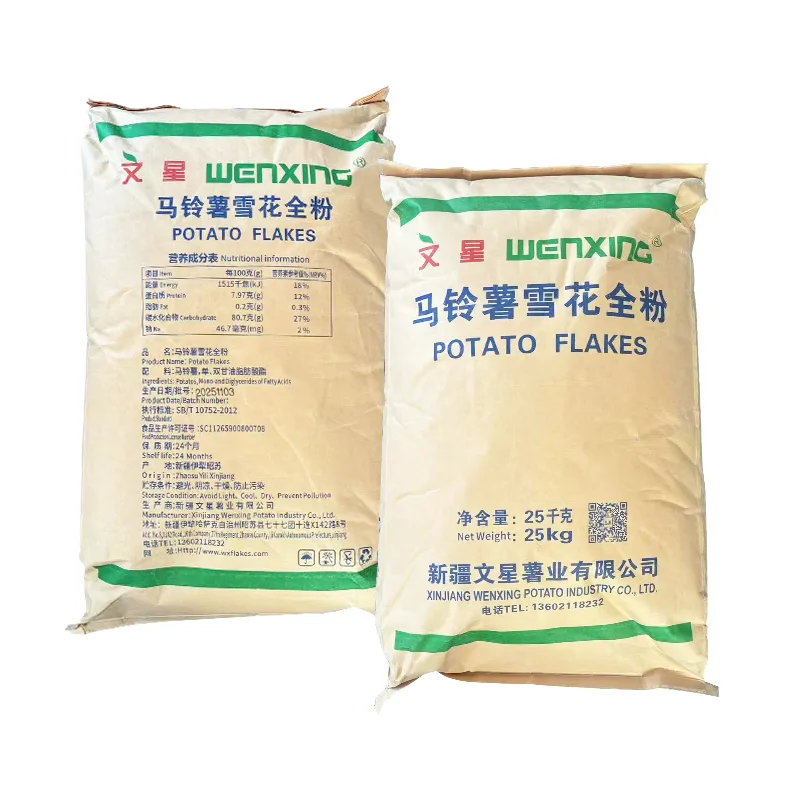
Dehydrated potato flakes are more than a potato-based food ingredient. In seasoning powder manufacturing, they can serve as functional carriers that help distribute powdered flavor components, improve blend consistency, and reduce the risk of ingredient separation. At Wenxing, we focus on the absorption capacity, particle fineness, flowability, and dispersion behavior of our Seasoning Powder Carrier Dehydrated Potato Flakes to meet different seasoning formulations, including chicken powder, beef powder, barbecue seasoning, soup mixes, and instant noodle seasonings. Understanding how these flakes work helps food manufacturers select a suitable carrier and achieve more consistent production results.
Table of Contents
- How Do Dehydrated Potato Flakes Work as Seasoning Powder Carriers?
- What Functions Do Potato Flakes Provide in Seasoning Formulations?
- What Factors Affect Carrier Performance?
- Where Are Potato Flake Carriers Used?
- Potato Flakes vs. Corn Starch as Seasoning Powder Carriers
- How Do We Control Product Quality?
- How to Choose the Right Potato Flake Carrier?
- Frequently Asked Questions
How Do Dehydrated Potato Flakes Work as Seasoning Powder Carriers?
In seasoning powder manufacturing, a carrier is not simply a filler. It helps distribute flavor ingredients throughout a dry blend and supports consistent handling during mixing, packaging, and storage. Dehydrated potato flakes can perform this role because of their porous structure, moisture-related properties, and ability to interact with different powdered ingredients.
Our Seasoning Powder Carrier Dehydrated Potato Flakes are developed for seasoning manufacturers that need a potato-based ingredient to support powder adsorption and dispersion. During formulation, the flakes can take up and retain portions of the seasoning mixture, helping distribute flavor components more evenly throughout the finished blend.
The working process can be understood in three stages:
- Adsorption: The porous structure of potato flakes provides contact surfaces that help accommodate powdered seasoning components and certain liquid flavor ingredients, depending on the formulation and processing conditions.
- Blending: When mixed with other dry ingredients, the potato-based carrier helps distribute seasoning components throughout the powder blend. Appropriate particle fineness is important for reducing visible segregation.
- Cooking and dispersion: When the seasoning is added to hot water, sauces, or food during cooking, the potato flakes can absorb water and disperse as part of the mixture. The actual dissolution and dispersion behavior depends on particle size, formulation, and processing conditions.
One point we emphasize is that adsorption and dispersion are not the same thing. A carrier may retain seasoning ingredients effectively but still perform poorly if its particle size differs significantly from the other ingredients. For this reason, we consider the overall formulation rather than evaluating absorption capacity alone.
What Functions Do Potato Flakes Provide in Seasoning Formulations?
For industrial seasoning production, the value of a carrier should be measured by how it performs in the complete formula. Based on the intended applications of our potato flakes, several functions are particularly important.
1. Supporting Seasoning Adsorption
Dehydrated potato flakes have a porous structure that can provide physical space for seasoning components. This makes them a useful option in formulations containing powdered spices, flavor blends, and certain liquid flavor preparations. The actual adsorption capacity should be evaluated using the customer's ingredients and mixing process.
2. Improving Blend Uniformity
Uneven distribution can cause noticeable flavor differences between individual portions of a seasoning batch. A carrier with suitable particle characteristics can help improve the distribution of flavor ingredients during mixing. We recommend matching the carrier's fineness to the main seasoning ingredients rather than selecting the finest available grade automatically.
3. Maintaining a Neutral Flavor Profile
Potato flakes generally have a mild, neutral potato flavor. This characteristic makes them suitable for many savory seasoning formulations where the carrier should not dominate the intended taste. However, for delicate seasoning profiles, we still recommend conducting a sensory test using the final formula.
4. Supporting Dispersion During Food Preparation
When seasoning powder is added to soups, sauces, instant noodles, or other prepared foods, potato flakes can absorb water and disperse within the mixture. This helps incorporate the carrier into the food preparation process. The final texture depends on the dosage, particle size, cooking temperature, and other ingredients in the formula.
What Factors Affect the Performance of Dehydrated Potato Flakes?
Not all potato flakes perform identically in seasoning applications. Even when two products have similar appearances, differences in particle size, moisture content, and physical structure can influence their behavior during industrial processing.
| Performance Factor | Effect on Seasoning Production | What Manufacturers Should Check |
|---|---|---|
| Particle Fineness | Affects blending uniformity, handling, and dispersion. | Whether the particle size matches the other powdered ingredients. |
| Moisture Content | Influences storage stability, powder flow, and the risk of caking. | Moisture specifications and packaging protection. |
| Adsorption Capacity | Affects how the carrier interacts with flavor powders and liquid seasoning components. | Performance in the actual seasoning formulation. |
| Bulk Density | Influences volumetric dosing, transportation, and blending behavior. | Consistency between production batches. |
| Microbiological Quality | Contributes to the overall safety and quality of food ingredients. | Microbiological test results and relevant food safety documentation. |
| Flowability | Affects feeding, conveying, mixing, and packaging operations. | Powder flow under actual processing conditions. |
For seasoning manufacturers, we suggest evaluating at least three indicators during sample testing: blend uniformity, flowability, and dispersion after adding water. These practical tests provide more useful information than relying on a single specification in a product sheet.
Where Are Potato Flake Carriers Used in Seasoning Powder Production?
Our Seasoning Powder Carrier Dehydrated Potato Flakes are intended for a range of savory seasoning applications. Different formulas place different demands on the carrier, so the required particle fineness and addition ratio should be adjusted according to the finished product.
Chicken Powder and Beef Seasoning
Chicken powder and beef seasoning commonly combine salt, flavor enhancers, spices, and meat-flavored ingredients. Potato flakes can act as a supporting carrier in these dry blends, helping distribute the ingredients throughout the formula. A neutral flavor profile is particularly useful when the seasoning needs to retain its characteristic meat flavor.
Soup and Broth Seasoning Mixes
Soup seasoning powders need to disperse reasonably well when added to hot water. Potato flakes can contribute to the body and texture of the reconstituted mixture while carrying other seasoning components. Manufacturers should evaluate the final soup's viscosity and mouthfeel when determining the inclusion level.
Barbecue Seasoning Powder
Barbecue seasoning often contains multiple spices, salt, sugar, and flavor ingredients with different particle sizes. A suitable carrier can support more consistent blending. For products containing oil-based flavor ingredients, compatibility and adsorption performance should be checked through formulation trials.
Instant Noodle Seasoning
Instant noodle seasoning packs require consistent flavor distribution and practical powder handling during high-speed filling. Potato flakes can be incorporated into seasoning blends, but manufacturers should pay attention to particle size compatibility, moisture control, and flow behavior to avoid feeding and packaging problems.
Potato Flakes vs. Corn Starch: Which Is Better for Seasoning Powder Carriers?
Corn starch is widely used in food processing, including seasoning formulations. However, potato flakes and corn starch have different physical properties and should not be considered direct substitutes in every formula.
| Comparison Item | Dehydrated Potato Flakes | Corn Starch |
|---|---|---|
| Raw Material | Potatoes | Corn |
| Physical Structure | Flake-based, porous structure depending on processing. | Fine granular starch powder. |
| Primary Formulation Role | Carrier, bulk ingredient, and texture contributor. | Thickener, binder, and formulation carrier depending on grade. |
| Water Interaction | Absorbs water and disperses as part of the food mixture. | Native starch typically requires heating for gelatinization and thickening. |
| Flavor Profile | Mild potato flavor. | Generally neutral flavor. |
| Typical Consideration | Suitable when potato-based texture and carrier properties are desired. | Suitable when starch functionality and thickening properties are required. |
Which material is better depends on the target product. If a manufacturer needs a starch-based thickener, corn starch may be the more appropriate choice. If the formula requires a potato-based ingredient with water absorption, texture contribution, and seasoning carrier functionality, dehydrated potato flakes are worth testing.
At Wenxing, we do not recommend replacing one carrier with another based on price alone. A meaningful comparison should include dosage, blending behavior, finished-product texture, processing efficiency, and total formulation cost. The best choice is the material that delivers the required performance at a practical inclusion level.
How Do We Control the Quality of Seasoning Powder Carrier Dehydrated Potato Flakes?
Consistent raw materials are important for seasoning factories because variations in particle size, moisture, and physical properties can affect an established production formula. At Wenxing, our approach is based on integrated potato industry operations, from raw material sourcing and processing to finished product sales.
Xinjiang Wenxing Potato Industry Co., Ltd. was established in August 2023 with a registered capital of RMB 45 million and a total investment of RMB 257 million, including RMB 227 million in fixed asset investment. Backed by Wenxing Agricultural Group (Tianjin) Co., Ltd., which has more than 20 years of experience in the potato industry, we focus on the integrated development of potato planting, processing, and sales.
For seasoning powder carrier applications, our quality control focuses on several practical aspects:
- Raw Material Management: Maintaining control over potato sourcing and processing conditions to support consistent ingredient quality.
- Particle Size Inspection: Checking product fineness to ensure suitability for different seasoning powder formulations.
- Physical Performance Testing: Evaluating adsorption-related performance and dispersion characteristics according to product requirements.
- Moisture and Microbiological Testing: Monitoring relevant quality indicators to support food ingredient safety and storage stability.
- Batch Documentation: Providing available quality inspection reports for customers to review during procurement and product evaluation.
We also understand that different condiment manufacturers have different processing requirements. Therefore, we support discussions about customized fineness, packaging options, and formulation compatibility before confirming bulk orders.
Learn more about our potato processing products and manufacturing capabilities.
How to Choose the Right Dehydrated Potato Flakes for Seasoning Production?
When selecting a potato flake carrier, we recommend starting with the finished seasoning product rather than choosing a raw material specification in isolation. The following points can help manufacturers make a more informed decision.
- Identify the seasoning type: Chicken powder, beef seasoning, barbecue blends, and instant noodle seasonings may have different carrier requirements.
- Confirm the required fineness: Compare the carrier particle size with the main seasoning ingredients to reduce segregation during blending.
- Evaluate adsorption and dispersion: Test how the flakes interact with the actual seasoning ingredients, particularly when liquid flavor components are involved.
- Check processing compatibility: Evaluate powder feeding, mixing, conveying, and packaging performance using the existing production equipment.
- Conduct a pilot batch: Compare flavor consistency, texture, moisture behavior, and finished-product quality before moving to large-scale production.
- Review supplier documentation: Confirm product specifications, quality reports, packaging details, and batch consistency requirements.
For manufacturers developing a new seasoning formula, we recommend starting with a small-scale trial. This makes it easier to identify the appropriate carrier dosage and particle fineness before adjusting the full production line.
Frequently Asked Questions
1. What are Seasoning Powder Carrier Dehydrated Potato Flakes?
They are dehydrated potato-based ingredients used as carriers in dry seasoning formulations. Their porous structure and water absorption properties make them suitable for supporting the distribution of powdered flavor ingredients and contributing to the texture of prepared foods.
2. Can dehydrated potato flakes prevent seasoning powder from clumping?
They may help improve powder handling when the particle size, moisture level, and formulation are properly controlled. However, they cannot independently prevent all forms of caking. Humidity, hygroscopic ingredients, storage conditions, and packaging also play important roles.
3. Are potato flakes suitable for chicken powder and beef seasoning?
Yes. Dehydrated potato flakes can be used in chicken powder, beef seasoning, soup mixes, and other savory formulations. Their mild flavor allows them to function as a supporting ingredient without necessarily dominating the intended seasoning profile.
4. Can potato flakes replace corn starch in seasoning powder?
They can replace corn starch in some formulations, but they are not functionally identical. Corn starch is commonly used for thickening and binding, while potato flakes can contribute carrier functionality, water absorption, and texture. A formulation trial is necessary before making a substitution.
5. Can Wenxing customize the fineness of potato flakes?
We can discuss customized fineness according to the customer's seasoning formulation and processing requirements. The specific available particle size, technical specifications, and supply conditions should be confirmed during product evaluation.
6. What quality indicators should manufacturers check before bulk purchasing?
Important indicators include particle size, moisture content, bulk density, adsorption-related performance, flowability, and microbiological quality. We recommend requesting product specifications and available batch inspection reports before confirming a bulk order.
7. Does Wenxing support samples and bulk supply?
Yes. We support product sample evaluation, customized packaging discussions, technical consultation on formulation compatibility, and bulk supply. Customers can contact our team to discuss sample arrangements, specifications, and delivery requirements.
Conclusion
Dehydrated potato flakes can play a practical role in seasoning powder manufacturing by supporting ingredient distribution, contributing to water absorption, and providing a potato-based component in savory formulations. Their performance depends on particle fineness, moisture control, formulation compatibility, and processing conditions rather than on a single property.
At Wenxing, we combine more than 20 years of group-level potato industry experience with an integrated approach to potato planting, processing, and sales. Our Seasoning Powder Carrier Dehydrated Potato Flakes are intended for condiment manufacturers and food processors looking for a reliable potato-based ingredient for different seasoning applications.
If you are developing a new seasoning formula or evaluating an alternative powder carrier, explore Wenxing's potato processing products or contact our team to discuss product specifications, sample testing, and bulk supply requirements.
Previous:No News
Send Inquiry
-
E-mail
X
We use cookies to offer you a better browsing experience, analyze site traffic and personalize content. By using this site, you agree to our use of cookies.
Privacy Policy
-
Email
-
Call Us
-
Address
No. 8, X142 Road, 10th Company of the 77th Regiment, Zhaosu County, Ili Kazakh Autonomous Prefecture, Xinjiang, China
Inquiry For PriceList
For inquiries about our products or pricelist, please leave your email to us and we will be in touch within 24 hours.
Copyright © 2026 Xinjiang Wenxing Potato Industry Co., Ltd. All Rights Reserved.